

Today Andrew and I are celebrating our twentieth anniversary. Our plan: taking our youngest and her friend to see the live-action version of the movie Aladdin. While that doesn’t sound too romantic, it is a bit sweet since watching the cartoon version was one of our first real dates twenty-six years ago. Not only have I been married a really long time now, I’ve recently begun to realize that at forty-seven years old, I am smack dab in the middle of mid-life. If I live as long as my grandparents, I’ve got anywhere from thirty-two to fifty-four more years left. I am at the unique point of having enough time behind me to have a little perspective but enough time ahead to implement some of that perspective and see how it plays out.
The Past Perspective
I grew up in a conservative Christian church. I went to a Christian college. When I graduated, I moved to Ukraine to be a missionary/teacher. As I got to know Ukrainians, I began to hear their perspectives on things like how American politics affected their country. I learned that many people there did not like Ronald Reagan, who was a hero in the part of the US I came from and in my own family. I had hardly met anyone who did not like Reagan at that point in my life, but when I moved to Ukraine, I learned that many of people there blamed his policies for the collapse of the Soviet Union and the political chaos and extreme inflation that hit Ukraine as a result. I learned that the public sentiment toward Mikhael Gorbachev was also negative for the same reason, although people here in the US had favorable attitudes toward him.
Living in a different culture did not just lead me to question what I believed about my country, though. I attended church every week in aUkrainian church similar to my own in America, but as time went by, I noticed some differences. They took communion from one cup, which they passed from one person to the next. I often tried to sit near the front during a service when communion was served in an effort to get the cup when it was still fresh! Not only that, but they used wine in that cup, so I had my first taste of alcohol in church. This differed greatly from my church at home, which taught abstinence from alcohol so thoroughly that they used grape juice in communion. Many of the Ukrainian churches we worked with believed that women should cover their heads in worship, taking that cue from I Corinthians 11. (Look it up and ask yourself why we don’t practice this.)

Change of Perspective
Experiences like these pushed me to question things I had always blindly accepted, both politically and spiritually. If these beautiful Christian people I loved believed it was acceptable to drink wine in church and expected women to cover their heads in worship, were they right? What exactly did the Bible teach about these things? More importantly, what was necessary for me to hold fast, and which of my beliefs could I loosen up on? What was cultural and what was essential? My beliefs had not been tested much until that point since I had surrounded myself with people who thought a lot like I did.
When I returned to the US, the same process happened in reverse. Suddenly, I was bombarded by teachings and opinions that seemed mired in American culture. I saw my own people slavishly following cultural norms instead of true Christian principles. To this day, I continue to hear vitriol disguised as piety, and I live perpetually amazed at how this can happen in Christian circles. I see politics mixed so intricately with faith that it becomes almost impossible to tell them apart. I hear independence and freedom preached to the extent that we forget the value of community and interdependence.
Essential Perspective
I have spent much of my adult life trying to discern what is cultural and what is Christian, whether in my own country or another. I have struggled to apply what I do think is essential. Most of all, I have struggled a great deal to love people who do not question their beliefs, people who do not see that their culturally-defined religion often is used to bludgeon those who differ.
What is essential? The very core of my answer I take from the mouth of Jesus himself, when an expert in the Jewish law asked him, “Teacher, which is the greatest commandment in the Law?” Jesus replied, “Love the Lord your God with all your heart and with all your soul and with all your mind.This is the first and greatest commandment. And the second is like it: Love your neighbor as yourself. All the Law and the Prophets hang on these two commandments” (Matthew 22:35-40).
I fear even typing this because I know there are some who will chalk me up as one of those mamby-pamby Christians who preaches all love and no truth. However, love is not mamby-pamby. It’s not weak. Love is not a cop-out. Love is fierce. Ask a mother who spends every day, all day sitting at the bedside of a chronically ill baby. Ask a dad whose girl is late for her curfew. Ask a husband whose wife struggles with debilitating depression or a wife whose husband dies unexpectedly. Love is strong; it fights; it holds on forever. Most importantly, it wants the very best for its beloved. That’s the love we need to have for Jesus and for others. That love drives the gospel. That love empowered Jesus to sacrifice everything, and that love can push us to examine our dearly held beliefs.
So on our twentieth anniversary, Andrew and I will take our thirteen-year-old “baby” to a movie and sit in comfy theater seats eating too-buttery popcorn. We will remember two much younger versions of ourselves who had much less defined perspectives on life and faith and the world and realize how we’ve grown since then and how far we still have to go. Maybe we will remember to let other people mature as well, to let them experience the love of God, the space to grow, the freedom to question, and the power that comes from the knowledge that they are loved.


 Not long ago, a young man named Ansar* came to Omaha from Central Asia with plans to study at a university in town. Before classes even started, when he had been here only a few weeks, he suffered a life-threatening brain aneurysm. Knowing no English, Ansar had only one friend in this country, another young man who grew up with him in his home town and came to the US to study a few years ago. This friend took it upon himself to care for Ansar in the hospital, bringing him things he needed, translating at times and helping however he could.
 There’s something else about Ansar that gives this story some even more interesting and relevant twists. As you may have guessed, Ansar is a Muslim. He’s not a terrorist, he’s not dangerous. He’s a college student who now has lost his visa because he’s not able to go to school. So he’s not legally in the country because he is in the middle of a potentially fatal episode. He’s working on changing his visa to a different type, but in the meantime, he’s receiving medical care from a hospital who may never receive payment for their work. He doesn’t have insurance, so he’s racking up staggering medical bills.
 After I published my last post about my experience at the mosque, I heard questions about why we went there and what we were doing. I decided to write a follow-up to that one and address some of the questions people might have had when they read it.
 Yesterday I complained before leaving work because I had to take my youngest to open gym at the gymnastics place last night and would have to sit there for an hour and a half waiting on her to do her thing. Later that evening during open gym, my girl asked me to come in the gym and play with her. Apparently other parents were in there showing me up, so I dropped my book and went in to watch her balance on the balance beam and practice her moves (and she was super cute and surprisingly athletic, if I can brag on her for a minute). While I watched and “helped” her, I snuck a few texts to a friend, commenting on how much lessons cost and how could we ever afford this? And I dreamed about what I’d do after all of the kids went to bed and the evening stretched out before me, free and open for Netflix or knitting or writing or whatever.
 surgery. No shots or IVs, a fact that relieved her greatly. She did get a splint and instructions to follow up with an orthopedist in five days just in case they missed a break. Today she proudly showed her arm to her brother and sister and explained what happened. They were in bed at the time and didn’t know we even went to the ER. She secretly told me that even though surgery would have been horrible, it would have been a good way to get some extra attention. My response: “Girl, if you need attention, I’ll take you out to ice cream! You don’t have to get surgery!”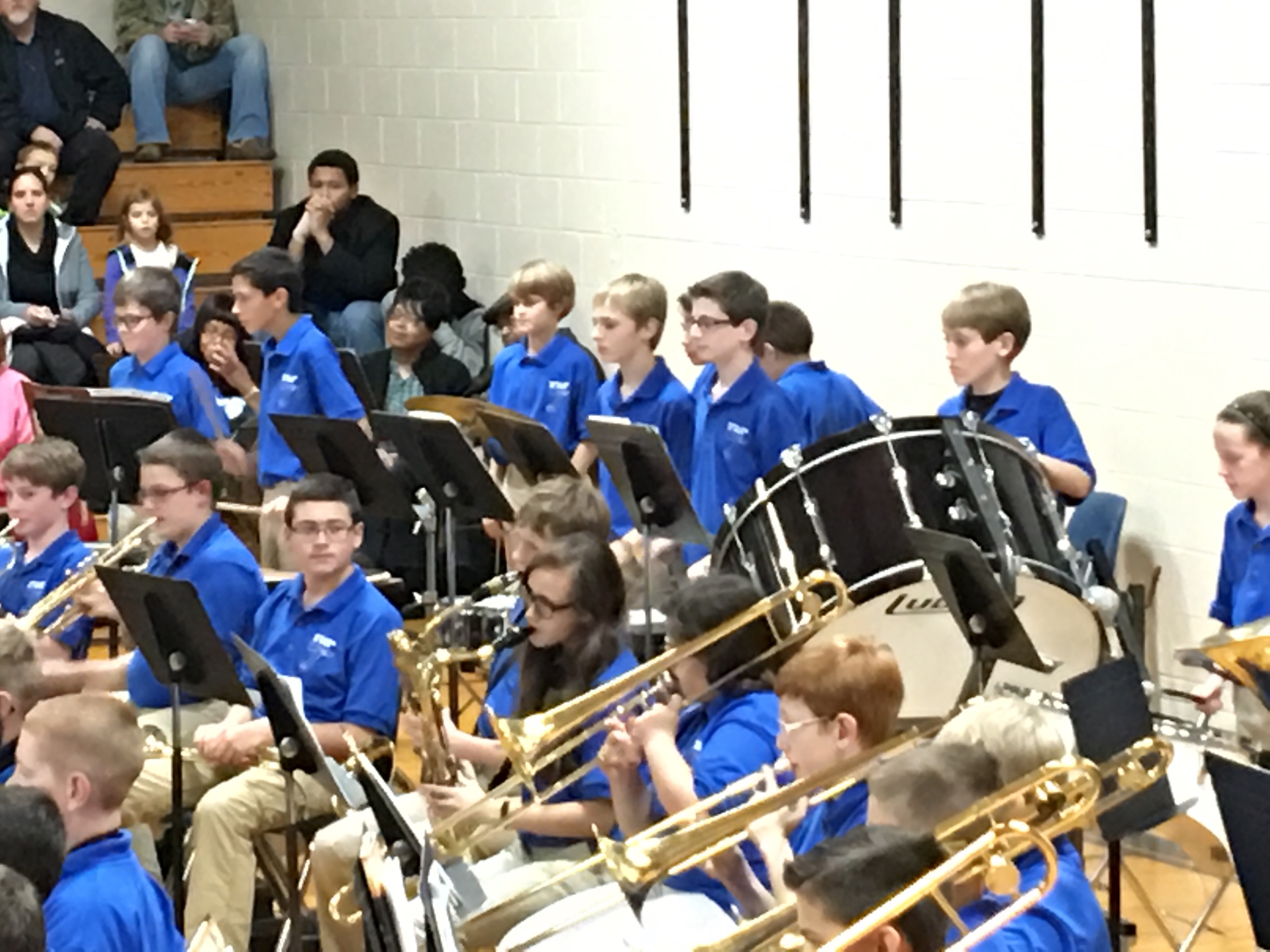



 We’d love to just have this special feeling all the time, to feel this love and connectedness with others without putting forth any effort. We all know that’s not really possible. The feelings we have at Christmas are like the feelings we have when we fall in love. We see that special person and the whole world lights up. We feel so happy. We can’t believe there’s someone so very wonderful in the world. We feel like suddenly everything that was wrong about us is now right because that person somehow completes us. That’s the Christmas feeling. Somehow for just a few days, without any work at all, the world seems like a happier, more loving, more peaceful place where everyone feels good and makes us all feel good too.



 Something Complete and Great