
When my husband was four years old, his mother gave birth to triplet daughters. All three of the babies died within two weeks of their birth. This sent his parents on a grief-filled tailspin that still affects them, their relationships with others, and their relationship with him and his sister to this day. One painful part of that experience included facing the attitudes of their fellow believers, who all had different theories about why God had “taken” those babies from them. One woman told his mother that they must have done something wrong that made God punish them by taking their triplets. The preacher must have agreed because he re-baptized them to absolve them from whatever sins they had committed that brought God’s wrath on them in this way. I wonder how their story would have been different if someone had allowed them to feel sad and grieve instead of blaming them for the deaths.
Suffering, pain, and grief have been part of the human experience since the beginning of time, and modern people are no more exempt from it than our ancient ancestors. Human suffering takes many shapes, but no matter its form, it creates anxiety in our lives, often forcing us to question its meaning and purpose, the goodness of God, and our ability to survive it. The presence of suffering causes us to live in the tension between believing that God loves us and wondering why he does not intervene to prevent difficulty in our lives.
The burning questions in the mind of the sufferer revolve around why suffering happens. Why do babies die and children experience chronic illnesses? Why would a believer in Christ live through a painful injury or broken relationship? Behind the question of why suffering happens stands the even more critical question: why would a loving God allow it to happen? Does God bring suffering upon people to teach them a lesson or to prove something? If he does not create suffering but is all-powerful, why would he allow it to exist and allow it to plague both the righteous and unrighteous? These difficult questions do not have any immediate answers.
Suffering is a universal experience. No human being, no matter upbringing, gender, socioeconomic status, or ethnicity, is exempt from suffering’s tax. Even those who lead relatively comfortable lives and escape physical difficulty encounter suffering in the spiritual and emotional realm. Despite the fact that verses sprinkled throughout the Bible allude to the idea that the righteous will be spared pain and turmoil, we often see the opposite play out. People reading the promises of blessings upon God’s people sometimes teach that we will be blessed, and life will go well for us if we joyfully follow God. When they experience pain, they wonder what they have done wrong to bring this punishment from God on themselves. If he blesses those he loves, does their suffering mean God does not love them or that he has turned his back on them?
In working with people whose children have died at the children’s hospital where I am a chaplain, I have been questioned many times about God’s involvement and possible orchestration of the deaths of children. As I told one grieving grandfather, “These types of events don’t line up with who I believe God is. I don’t know why he allows it, but I do know he’s here with you during it.” I can tell him that God knows more than we do, which I do believe, but that does not help him resolve the questions he has. I can tell him that God has healed his grandchild and made him perfect and whole but that we have to wait to witness that ourselves when we meet again in Heaven, which I also do believe. However, to him those answers feel hollow in a moment of fresh grief. All I can say is that God still loves him, he will always be with him, and none of us really understands the reason behind his grandson’s death.
I do not believe that God brings death and pain into our lives. To believe that makes God cruel and heartless, and I do not think God is either of those. I do believe he can and will use those circumstances to teach us about himself and to draw us closer to him and to one another. As for the misguided belief that the righteous are given blessings and that blessings indicate God’s favor, I point to the words of Jesus who said we would have trials of many kinds in this world, but we must remain hopeful for he has overcome the world (John 16:33). I remember the experiences of Paul and the other apostles, whose lives were full of trials because of their choices to follow Jesus, and yet they remained faithful because they knew that God was with them throughout.
The Easter season always casts light on the tension between suffering and restoration. We remember the suffering of Jesus as he died, the panic of his disciples during the days following, and the joy they experienced when they discovered that he had conquered death. As believers, we hang somewhere in the tension between knowing God is all-powerful and waiting faithfully for his power to be displayed. For the parents in the hospital whose babies are ill, for my own in-laws who have suffered unnamed pain for decades, and for my own painful life experiences, I pray that God works in the midst of our suffering, that none of our tears go unnoticed as we join the legions of those before us who have suffered and persevered.


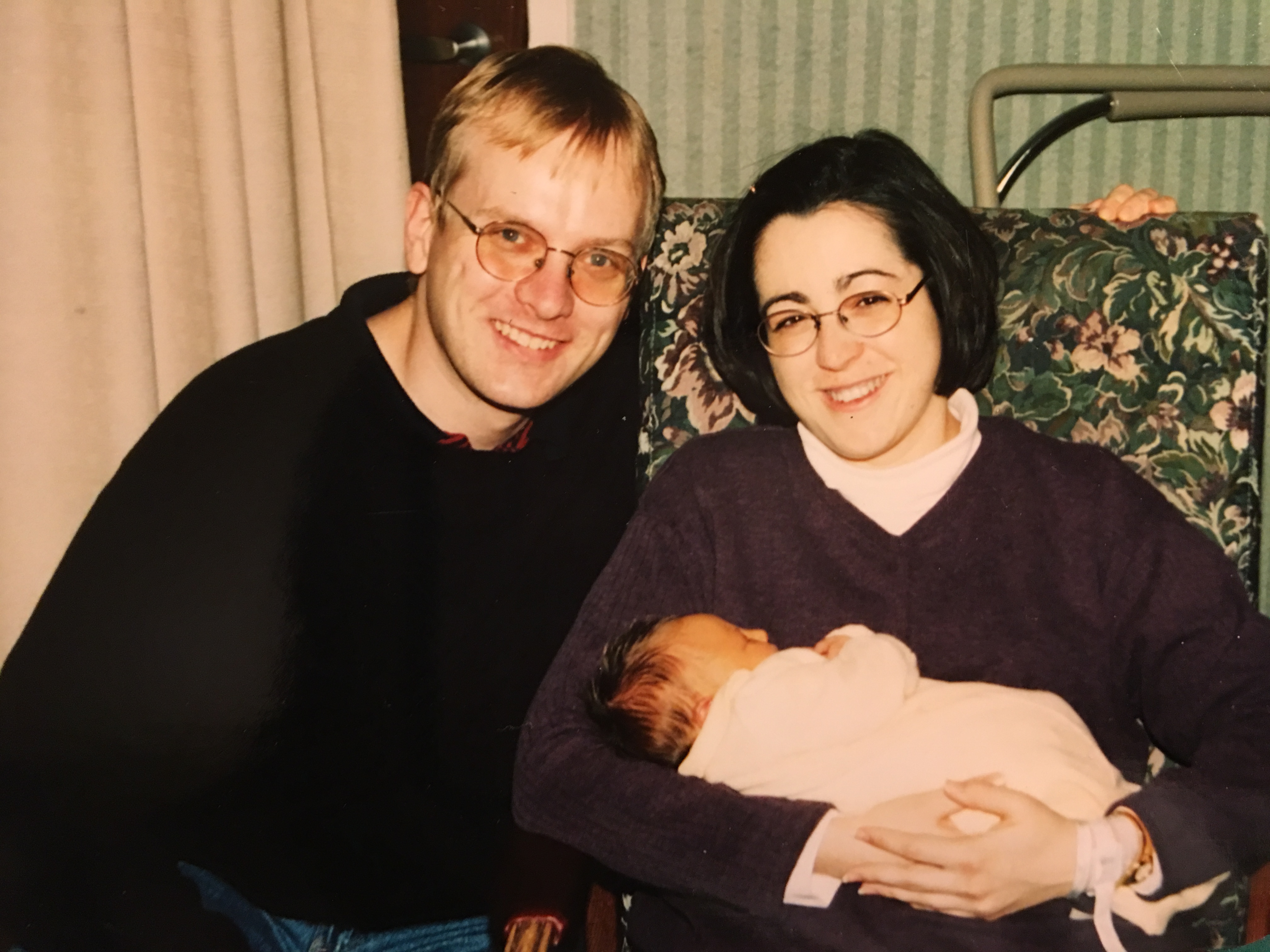 That particular New Year’s Eve, we were in the hospital early in the morning, and Hannah was born around 2:30 pm. We were supposed to go to a party with our small group from church, but instead we called them and told them we were in the hospital with our new baby. They all spent the night at their party and came to visit us in the hospital the next day. We were the first of the group to have a baby, so everyone passed her around, talking to her and cuddling her. Those are special memories.
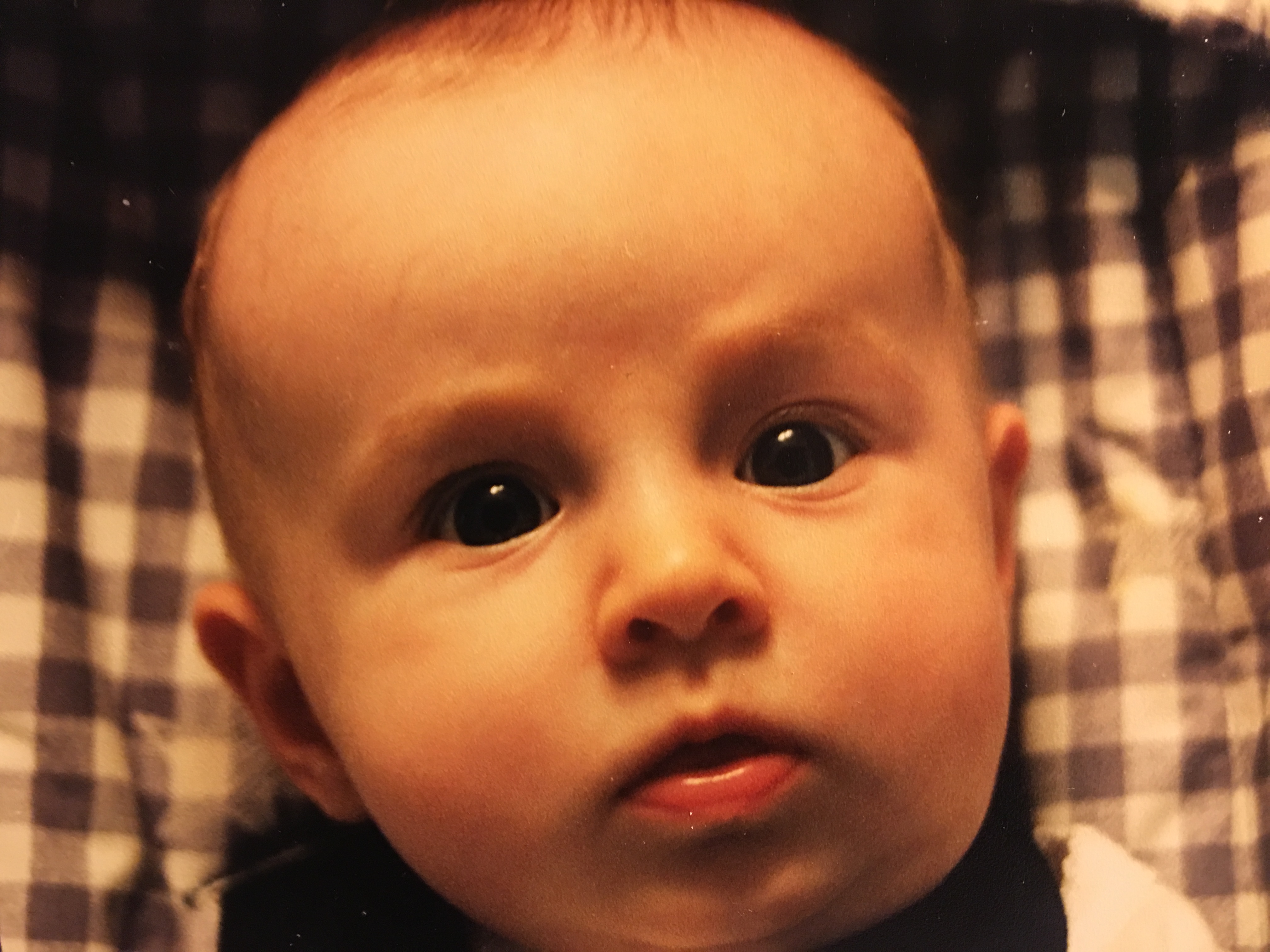 We had no idea how having a baby would change our lives. We had a cerebral knowledge that everything would be different, but we didn’t know how that change would feel on a day to day basis. I remember telling a coworker I’d decide whether to do some freelance work “when everything went back to normal” after the baby was born. She just laughed and said, “Nothing is ever going back to normal.” How right she was!
 I spent my whole childhood and young adulthood preparing for and doing ministry. I was 100% in when it came to my work. I loved living overseas, loved teaching, loved the kids I worked with, loved my friends there. I loved it all! Having a baby, we decided we’d be staying in the US for a long time. We decided I would stay home with the baby instead of trying to find a job that paid enough to cover childcare. I guess I thought motherhood would be my thing, but over time I still missed other things. I had trouble figuring out what my niche was in this new state of affairs. Besides childcare, did I have a purpose?
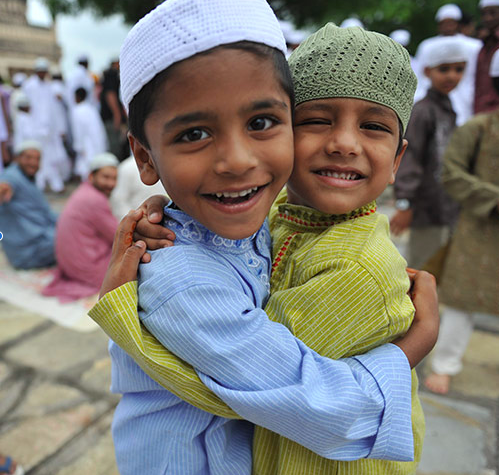 After I published my last post about my experience at the mosque, I heard questions about why we went there and what we were doing. I decided to write a follow-up to that one and address some of the questions people might have had when they read it.
 Yesterday I complained before leaving work because I had to take my youngest to open gym at the gymnastics place last night and would have to sit there for an hour and a half waiting on her to do her thing. Later that evening during open gym, my girl asked me to come in the gym and play with her. Apparently other parents were in there showing me up, so I dropped my book and went in to watch her balance on the balance beam and practice her moves (and she was super cute and surprisingly athletic, if I can brag on her for a minute). While I watched and “helped” her, I snuck a few texts to a friend, commenting on how much lessons cost and how could we ever afford this? And I dreamed about what I’d do after all of the kids went to bed and the evening stretched out before me, free and open for Netflix or knitting or writing or whatever.
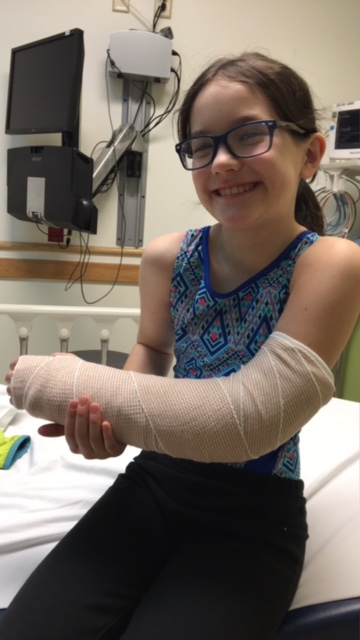 surgery. No shots or IVs, a fact that relieved her greatly. She did get a splint and instructions to follow up with an orthopedist in five days just in case they missed a break. Today she proudly showed her arm to her brother and sister and explained what happened. They were in bed at the time and didn’t know we even went to the ER. She secretly told me that even though surgery would have been horrible, it would have been a good way to get some extra attention. My response: “Girl, if you need attention, I’ll take you out to ice cream! You don’t have to get surgery!”




 Something Complete and Great